Mission Control
The browser becomes an operational workspace.
Mission Control is the defining TAHAI Browser capability: native browser surfaces organized around a technical mission rather than a pile of unrelated tabs.
Development contextThe layouts below describe intended native architecture and approved product contracts. They are not final runtime screenshots.
Native Mission Tabs
Context remains attached to the work.
Mission Tabs are intended to carry role, pane, runbook, timeline, and evidence context while preserving Chromium-native navigation, process isolation, permissions, storage, DevTools, and profile behavior.
Active-pane navigationProfile boundariesSession restorePhysical Back/ForwardDevTools
Architecture illustration
Logs and health
Live validationProvider docs
Source materialRunbook + evidence
Handoff trailMission surfaces
Purpose-built around operator flow.
TAHAI Browser is intended for work across cloud consoles, identity platforms, DNS, hosting, GitHub, deployment systems, logs, documentation, runbooks, support, and technical evidence.
Procedure beside execution.
Steps, checkpoints, rollback conditions, validated references, and handoff notes remain available beside the active browser panes.
Work and procedure stay aligned.Technical history with boundaries.
Record useful, reviewable metadata without copying cookies, tokens, authorization headers, credentials, or raw browser-storage content.
Evidence without secret leakage.Operator tools inside governed surfaces.
Tools must use explicit contracts and payload validation. Generic command execution and secret-retrieval APIs are prohibited.
Useful capability, narrow privilege.Admin Console Profiles
Separate the work that should stay separate.
Profile-scoped feature services are designed to preserve browser-profile boundaries while organizing common technical environments and Mission Recipes.
Microsoft 365EntraAzureAWSGoogle WorkspaceCloudflareGitHubVercelDNS and registrarsHosting platformsSupport systemsDocumentation
Concept continuity
Approved ideas survive; legacy architecture does not.
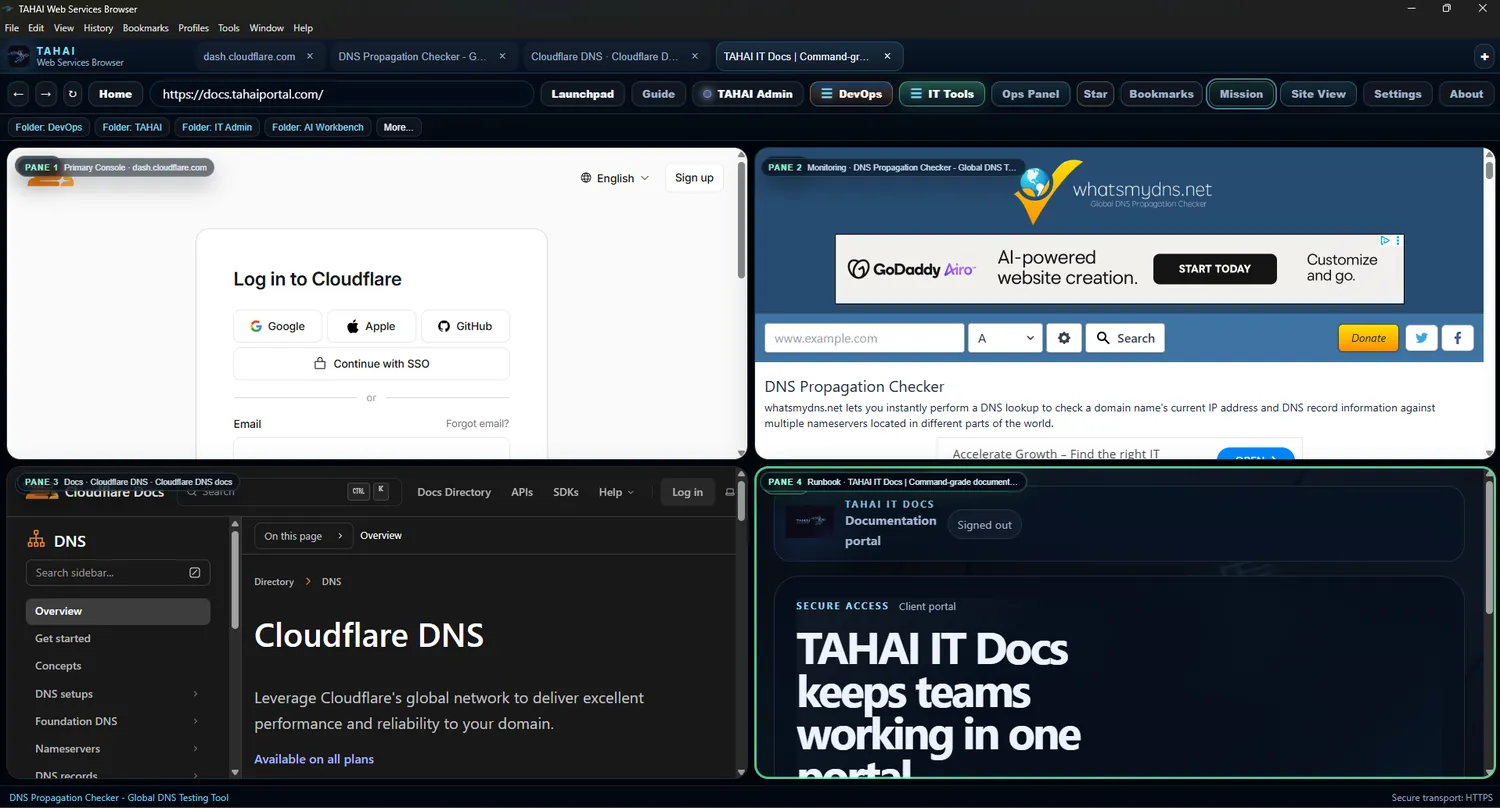
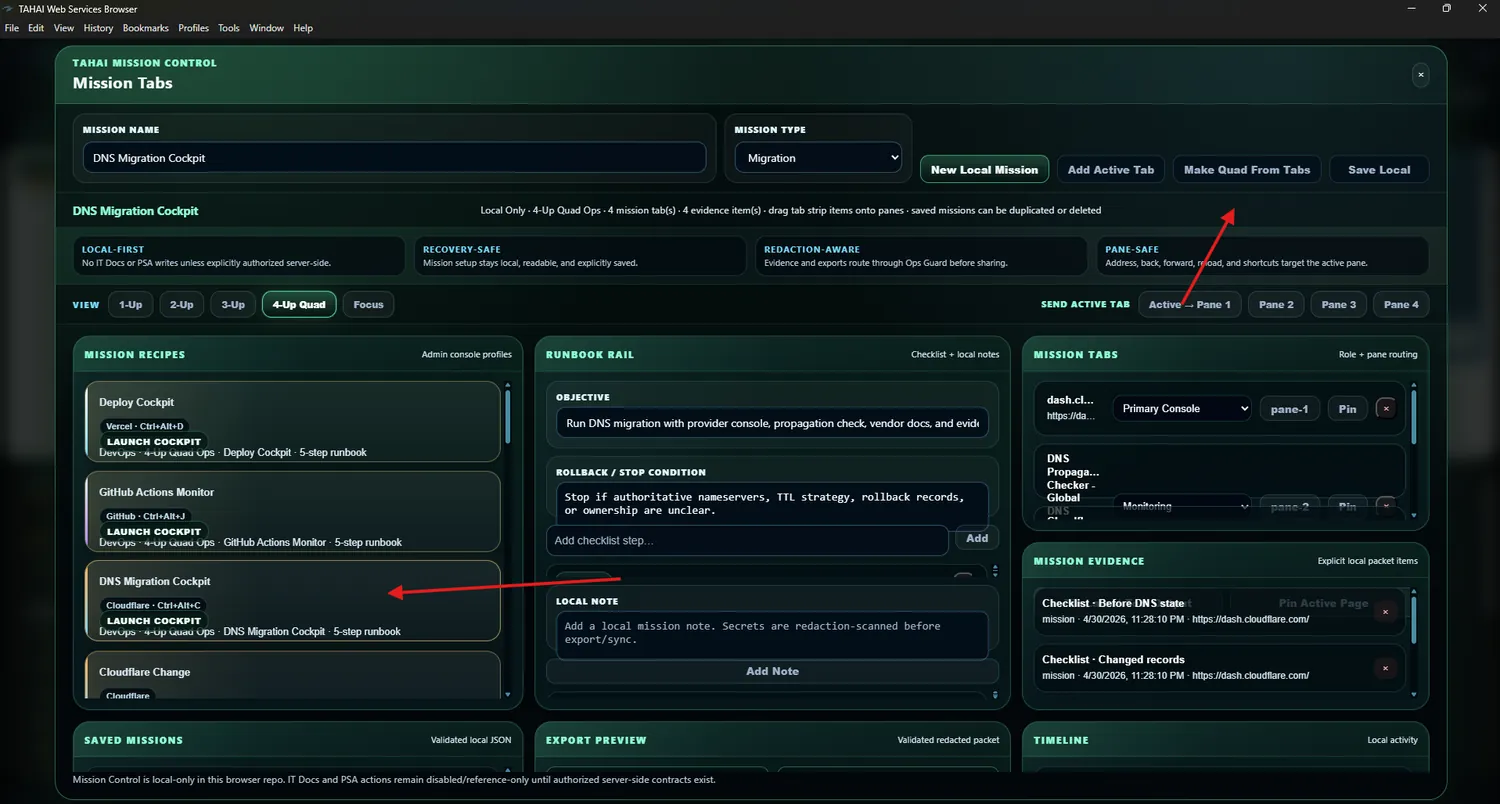
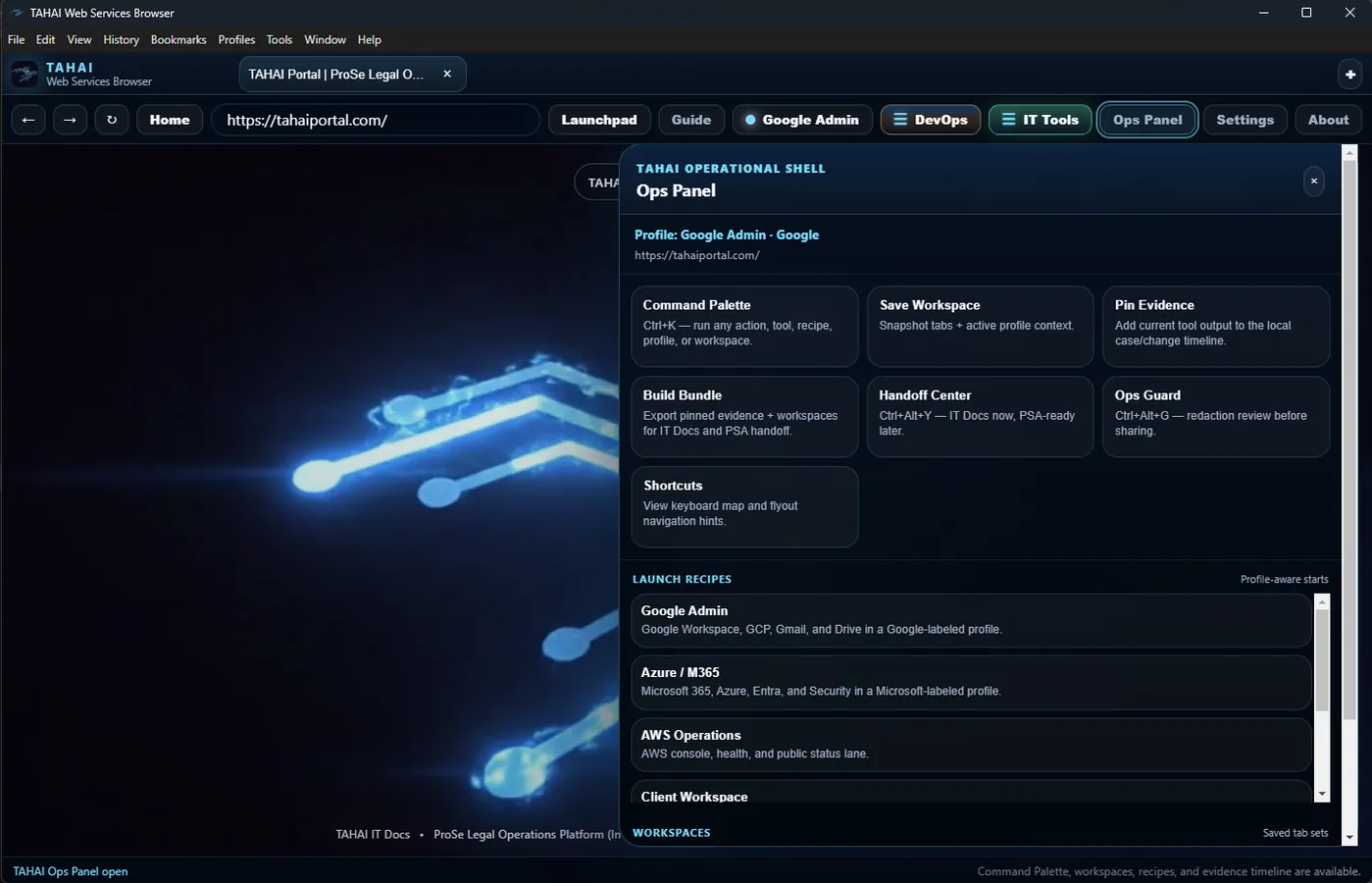
The legacy Electron generation remains a design and workflow reference. These images are explicitly historical concept references and are not proof of the native Chromium runtime.
Long-term direction
Adaptation comes after the native foundation.
A future Daily Driver mode may adapt to the user’s established way of working, but that remains a long-term goal. It is not part of the six-pass release path and is not a current product promise.